Project: Standard Re-validation of all our standards

ICC standards are the official analytical methods and procedures published by the International Association for Cereal Science and Technology to ensure consistency, comparability, and quality in cereal and food testing. According to ICC’s own validation procedure, these standards are checked regularly to determine whether re-validation is needed, for example when the scope is expanded or other significant changes affect the method.

ICC standards play an important role in cereal science and food analysis because they provide harmonized methods that laboratories can use to generate reliable and comparable results. Their value lies not only in technical accuracy, but also in creating a common language for research, industry, and quality control.

To keep these methods fit for purpose, ICC regularly reviews whether a re-validation is necessary. Re-validation may be triggered by changes such as an expanded scope, modifications to the method, new equipment, updated reference materials, or other developments that could affect performance. This approach helps ensure that the method remains robust, relevant, and scientifically sound over time.

The plan to re-validate ICC standards therefore follows a structured quality-management logic: identify the need for re-validation, assess the impact of the change, define the validation requirements, and document the outcome transparently. In practice, this means that only methods that continue to meet the expected performance criteria are maintained as ICC standards.

Overall, the re-validation process supports the credibility of ICC standards and strengthens confidence in the results generated with them. It is a practical safeguard that keeps methods aligned with current scientific and analytical requirements.

The following working groups were set up:

  • 1. Grains, Sampling and sample preparation (milling)
  • 2. Carbohydrates
  • 3. Macronutrients (Working group already started)
  • 4. Micronutrients
  • 5. Safety
  • 6. Rheology (Working group already started)
  • 7. Enzymatic activity, Allergens, Statistics

We also warmly invite interested parties to join the relevant working groups and contribute their expertise to the ongoing development and re-validation of ICC standards. Participation in these groups offers a valuable opportunity to support scientific quality, share practical experience, and help shape methods that meet the needs of research and industry.

ICC membership is not required to join a working group. If you are interested in contributing, please send your expression of interest to This email address is being protected from spambots. You need JavaScript enabled to view it. and include a short biographical sketch outlining your background.

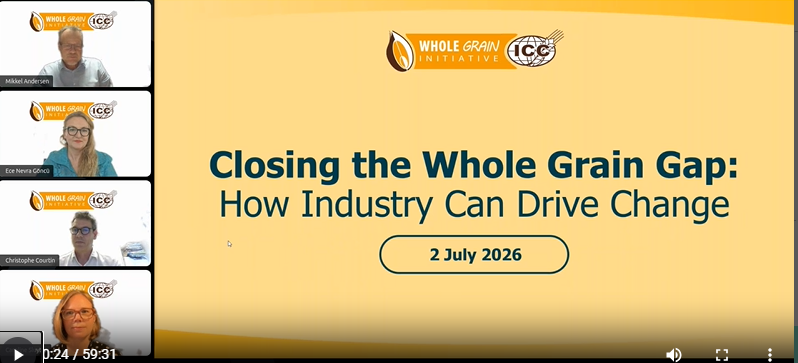
Follow-up Report to the "Closing the Whole Grain Gap: How Industry Can Drive Change" webinar from 02 July 2026

Webinar follow-up report

The webinar “How industry can drive change in closing the whole-grain gap” made a strong case for why whole grains should be a strategic priority for the commercial sector. The speakers highlighted the combined health, sustainability, consumer, policy, and business arguments for accelerating the shift from refined grains to whole-grain products.

The session was driven by the ICC Whole Grain Initiative, organized and hosted by EUFIC and ICC, with the clear aim of inspiring industry stakeholders to take a more active role in increasing whole-grain usage and consumption. The speakers positioned whole grains not only as a nutrition issue, but as a systems topic with relevance for public health, environmental sustainability, and commercial innovation.

Main messages

Christophe Courtin, Professor at the University of Leuven in Belgium, where he leads a research group focused on cereals, whole grains, and health, emphasized that replacing refined flour with whole-grain flour retains valuable bran and germ fractions, which improves nutritional quality and reduces environmental impact. He also referenced evidence linking higher whole-grain intake with better health outcomes, including lower risks of type 2 diabetes, coronary heart disease, colorectal cancer, and overall mortality. The presentation also stressed that current whole-grain intake remains far below recommended levels in Europe and globally.

Mikkel Andersen, industry representative from Lantmännen Unibake in Copenhagen, Denmark, underlined that the market opportunity is real: consumers increasingly associate whole grains with health, and many also perceive them as tasty and suitable for everyday products such as bread, cereals, pasta, and rice. At the same time, they noted that price, availability, and habit remain the biggest barriers to change.

Policy and institutional momentum

Caroline Sluyter, Senior Director of Operations at Oldways in Boston, USA presented examples showing that whole grains are gaining ground in policy and institutional settings. She highlighted growing alignment in dietary guidelines, stronger focus on labeling, public procurement, and public-private partnerships, as well as examples from Denmark and Sweden where coordinated action has helped increase whole-grain intake. The message was that the policy environment is increasingly supportive, and industry can now move faster in response.

Industry role and examples

A key theme of the webinar was that the private sector sits closest to consumers and therefore has the strongest ability to influence everyday dietary choices. The speakers outlined several levers for action, including reformulation, affordability, shelf placement, promotions, clear labeling, and taste-led marketing. They also shared examples of companies and retailers already making progress, such as Cereal Partners Worldwide, PepsiCo, Lidl, Walmart, Albert Heijn, Kelenova, Podravka, Lantmannen, and Brüggen.

Key outcomes and resources

The webinar closed with a practical call to action: join the ICC Whole Grain Initiative working groups, subscribe to updates, follow the initiative’s channels, and engage with International Whole Grain Day in November. Ece Göncü, Head of Nutrition, Regulatory and Scientific Affairs at Cereal Partners Worldwide and also President of CEREAAL, the European Breakfast Cereals Association, presented sector toolkits developed to support reformulation in breakfast cereals and baked goods, and noted the recent announcement of an ISO standard for whole grain as a major milestone for definitions, regulation, and future claims.

Overall, the webinar reinforced that closing the whole-grain gap will require coordinated action across science, policy, and industry, with the private sector playing a decisive role in turning evidence into accessible, affordable, and appealing products for consumers.

Harald Perten Prize 2026: Prof. Dr. Senay Simsek and Dr. Sean M. Finnie

The Harald Perten Foundation is pleased to announce that the Harald Perten Prize 2026 is awarded to Prof. Dr. Senay Simsek (Purdue University, US) and Dr. Sean M. Finnie (Sif Grains, LLC, US). ✨ The Prize, presented every two years, recognizes outstanding achievements in science, research, teaching, or knowledge transfer that serve cereal science and technology, with particular focus on practical applications in starch, gluten, and enzyme systems.

🏆 Prof. Dr. Senay Simsek is Professor and Head of the Department of Food Science at Purdue University, where she holds the Dean's Chair in Food Science. A leading authority on wheat quality and cereal functionality, she previously built and led the Wheat Quality and Carbohydrate Research Program at North Dakota State University. Her research has advanced the scientific basis for objective wheat quality testing and the structure–function understanding of cereal proteins, starches, and dietary fibre, work that has shaped breeding, milling, and product development worldwide. She has authored more than 250 peer-reviewed publications and has played an active role in international training, crop quality surveys, and industry education on behalf of the global wheat trade.

🏆 Dr. Sean M. Finnie is Founder and Principal Consultant of Sif Grains, LLC and most recently served as Director of the USDA-ARS Western Wheat Quality Laboratory. Earlier in his career he held research and development leadership roles at Bay State Milling Company and Cargill, following doctoral and postdoctoral training at Kansas State University and KU Leuven. His work has focused on wheat lipids, starch and gluten functionality, and dietary fibre, with direct contributions to the commercialization of high-amylose wheat, improved fibre methodology, and seed purity testing. He has also served the cereal science community through editorial work for Cereal Chemistry and leadership roles within the Cereals & Grains Association, and he currently serves as Interim Executive Director of the Wheat Quality Council.

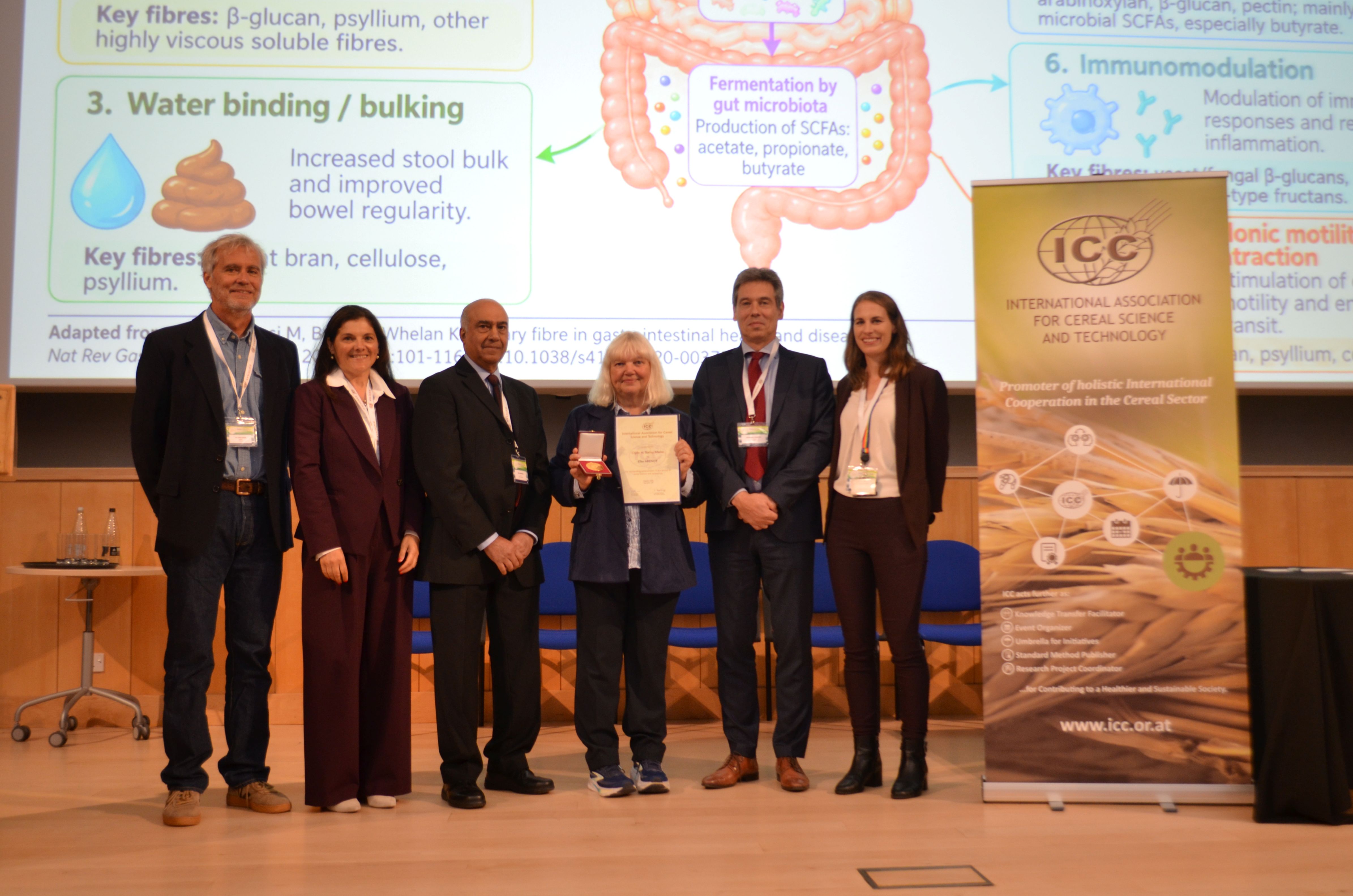
Together, the two recipients reflect the full breadth of the Harald Perten Prize's mission: connecting rigorous scientific inquiry with practical, industry-facing solutions that strengthen cereal quality and value chains around the world. The Prize will be presented in the form of a plaque and honorarium, at the upcoming 9th International Dietary Fibre Conference, in Norwich, UK.

The Harald Perten Prize, with its chair of the Harald Perten Foundation, Jaan Perten, aims to honor exceptional work in the areas of starch, gluten, and enzymes, with a focus on practical applications. It is presented every 2 years in connection with the ICC Conferences, and to date, 35 recipients have been awarded this prestigious prize.

Congratulations to Prof. Dr. Senay Simsek and Dr. Sean M. Finnie on their well-deserved honor!
More information about the Harald Perten Prize and the ICC Academy is available here.

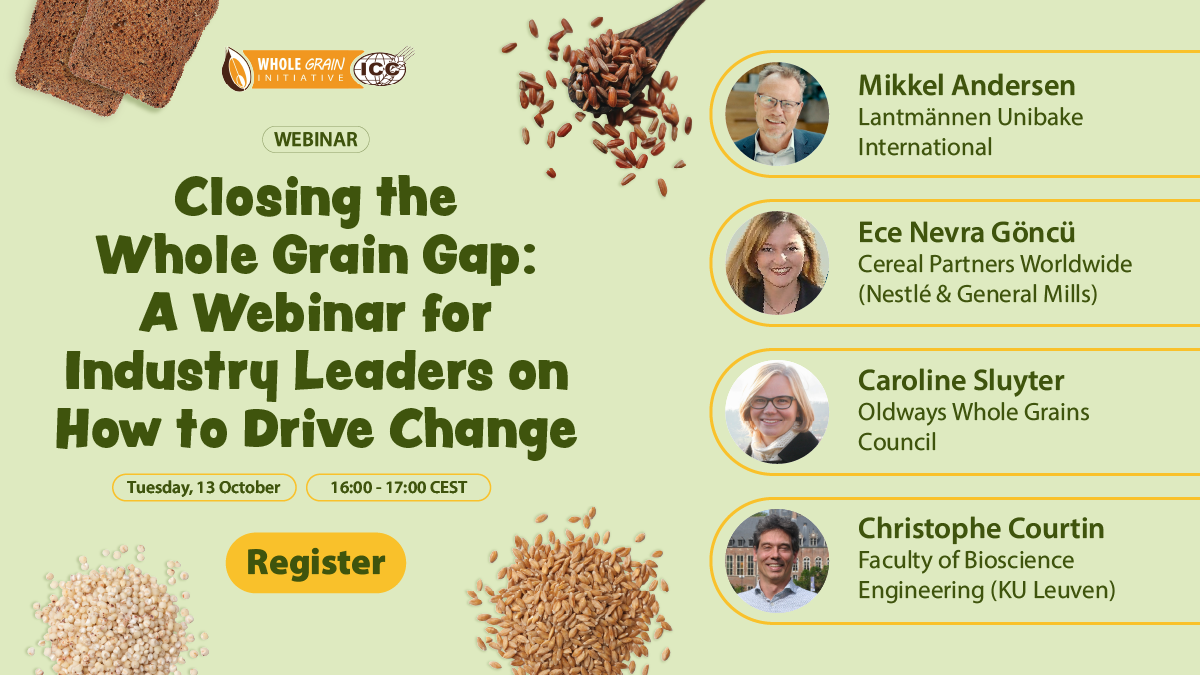
Join the ICC WGI webinar "Closing the Whole Grain Gap: A Webinar for Industry Leaders on How to Drive Change", 02 July 2026

Following strong interest in our earlier session in March 2026, we're running this webinar again to reach more people working in private-sector organisations across the food value chain. We'll explore how they can strengthen their market position while contributing to healthier food environments through greater integration of whole grains.

Consumer demand for healthier and more sustainable food choices continues to grow. Dietary guidelines increasingly prioritise whole grains, and the scientific evidence supporting their health benefits is well established. Together, these trends point to a clear priority: increasing whole grain intake.Yet in most markets, consumption remains well below recommended levels. This gap represents both a public health challenge and a tangible business opportunity across the food value chain.

By making whole grain products more available, visible and appealing, businesses can help shape purchasing habits at scale. As organisations that influence formulation, pricing, communication, and access, the industry plays a decisive role in what becomes accessible, attractive, and ultimately normalised in the marketplace. Every gram counts.

In this session, we will explore:

  • Why whole grains are becoming a strategic business opportunity in today’s evolving marketplace
  • Practical actions companies can take to increase availability, visibility and uptake
  • How to move from intention to implementation, including collaboration opportunities through initiatives such as the Whole Grain Initiative

The conditions for change are in place. The question is: will you lead?

Speakers: 

  • Caroline Sluyter, Senior Director of Operations, Oldways / Whole Grains Council, US
  • Mikkel Andersen, Global Lead Health & Nutrition, Lantmännen Unibake International, DK
  • Prof. Dr. Christophe Courtin, Professor of Food Biochemistry at KU Leuven, KU Leuven, BE
  • Dr. Ece Nevra Göncü, Head of Nutrition, Regulatory and Scientific Affairs, Cereal Partners Worldwide (CPW), CH

This webinar is free and will be held in English. 

REGISTER HERE

DF26: Extension of Oral Abstract Submission Deadline to 26 May 2026

The 9th International Conference on Dietary Fibre (DF26) takes place from 6 to 8 October 2026 at the Quadram Institute in Norwich, United Kingdom. 

We are pleased to announce an extension of the submission deadline for oral abstracts to 26 May 2026. We look forward to receiving further high-quality contributions!

The conference will bring together researchers, industry professionals, and policymakers to explore the latest developments in dietary fibre science and its role in health, nutrition, and sustainable food systems. Key thematic areas include fibre analytics, gut health, novel fibre sources, and strategies to address the global fibre gap.

Poster abstract submissions will remain open until 11 August 2026.

Further important deadlines include 10 September 2026 for registration and payment for inclusion in the programme leaflet and book of abstracts, and 22 September 2026 for final PDF submission by poster authors.

Detailed submission guidelines are available at https://www.dietaryfibre.org/abstracts.

Visit the website